Ecology of Abney Park
Jump to: Introduction • Trees • Birds • Plants • Bugs & Butterflies • Fungi
Abney Park was the first statutory Local Nature Reserve to be designated in Hackney. The site offers the visitor a wealth of ecological riches that are unusual so close to the centre of London.
Abney Park is a “SINC” (site of importance for nature conservation). You can find out more about the role of SINCs and their importance for conservation here
As an historic parkland originally laid out in the early 18th century, the park was later converted into a garden cemetery and arboretum in the 1840s, so this land has a long history as a place full of a diverse range of flora and fauna.
One of the best ways to discover the ecological diversity located within Abney Park is to watch the talk video hosted by Russell Miller, or to enjoy his audio walk.
Russell is an arboricultural and ecological consultant. He specialises in veteran trees together with the fungi and invertebrates they support. He has written two papers for the London Naturalist about Abney, as well as Abney's veteran tree management plan. He has studied trees and wildlife at Abney for 25 years and wrote his MSc thesis on Abney's nationally important decaying wood invertebrates. He teaches about trees, ecology and connecting with nature. He also leads guided walks and is a wildlife photographer.
-
After a number of years in development and consultation, in October 2025 Hackney Council published its Woodland and Ecology Management Plan for Abney. This is a very welcome step.
We understand from the Parks Team that this plan is intended to codify the Parks Team’s current practice as at 2025, as well as identifying principles for future management. The Parks Team does not intend the document to set out any priorities for action, nor any time scales within which particular steps should be taken; nor is this document intended to provide a road map as to how the ecological health of the site could be monitored in practice.
Here at the Trust, we have always recognised that Abney is a complex site with multiple demands on it (nature reserve, cemetery, arboretum, historic landscape, place for recreation). In terms of natural history alone the complexity is significant with many hundreds of species of plants, fungi, vertebrates and invertebrates.
Managing such a site for the benefit of wildlife whilst delivering against all the other demands placed on Abney requires a very wide range of skill sets and experience and we hope that the Parks Team will value the expertise and input of the many individuals who have shown and continue to show their commitment to the ecology of the site.
The Trust looks forward to engaging with Hackney Council and other interested groups to further to understand how this plan will be operationalised and the necessary specialist skills harnessed to make meaningful change towards tackling the biodiversity challenge, as it presents itself on our doorstep, here in Abney.
Listen to Russell Miller’s audio walk: Abney Nature: Trees and Ecology

Trees
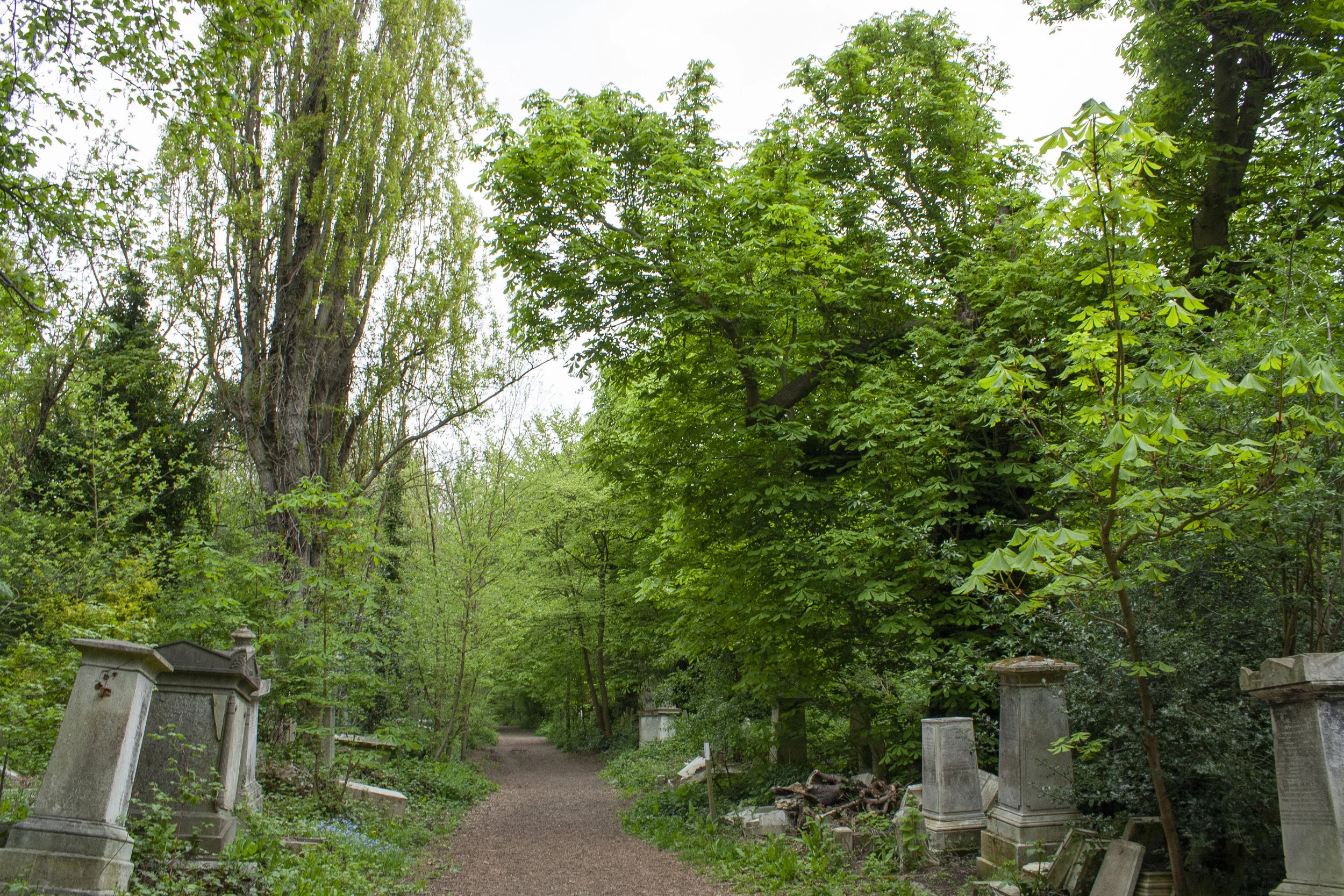
Abney Park's 13 hectares of woodland is home to around 200 'old' trees.
The site's history as a woodland started in 1840 when it was planted as an exotic arboretum by the famous Victorian horticulturalists the Loddiges. Today there are still some specimens that remain from that planting, as well as others that were planted later in the 19th century.
Abney's big, old trees are vital for providing homes for bats, owls and other large animals. Even more importantly, many insects and fungi can only exist where there are old trees at just the right stage of decay.
Abney has a remarkable diversity of insects and fungi, with many locally and even nationally rare species. Beautiful Orange Shield Cap and Silky Rosegill toadstools can be found growing on rotting poplar wood in late summer and autumn. Other rare fungi live inside the old trees. Hundreds of species of insect, most of which have yet to be identified, inhabit the dead and dying trees.
The Abney Park Veteran Tree Project
The Abney Park Veteran Tree Project was funded by the London Tree and Woodland Grant Scheme, with the aim of protecting and promoting Abney's veteran trees - trees that are of particular value to wildlife due to damage, decay or old age. In 2009, over 170 old trees at Abney were surveyed and 60 were found to have veteran characteristics.
Birds
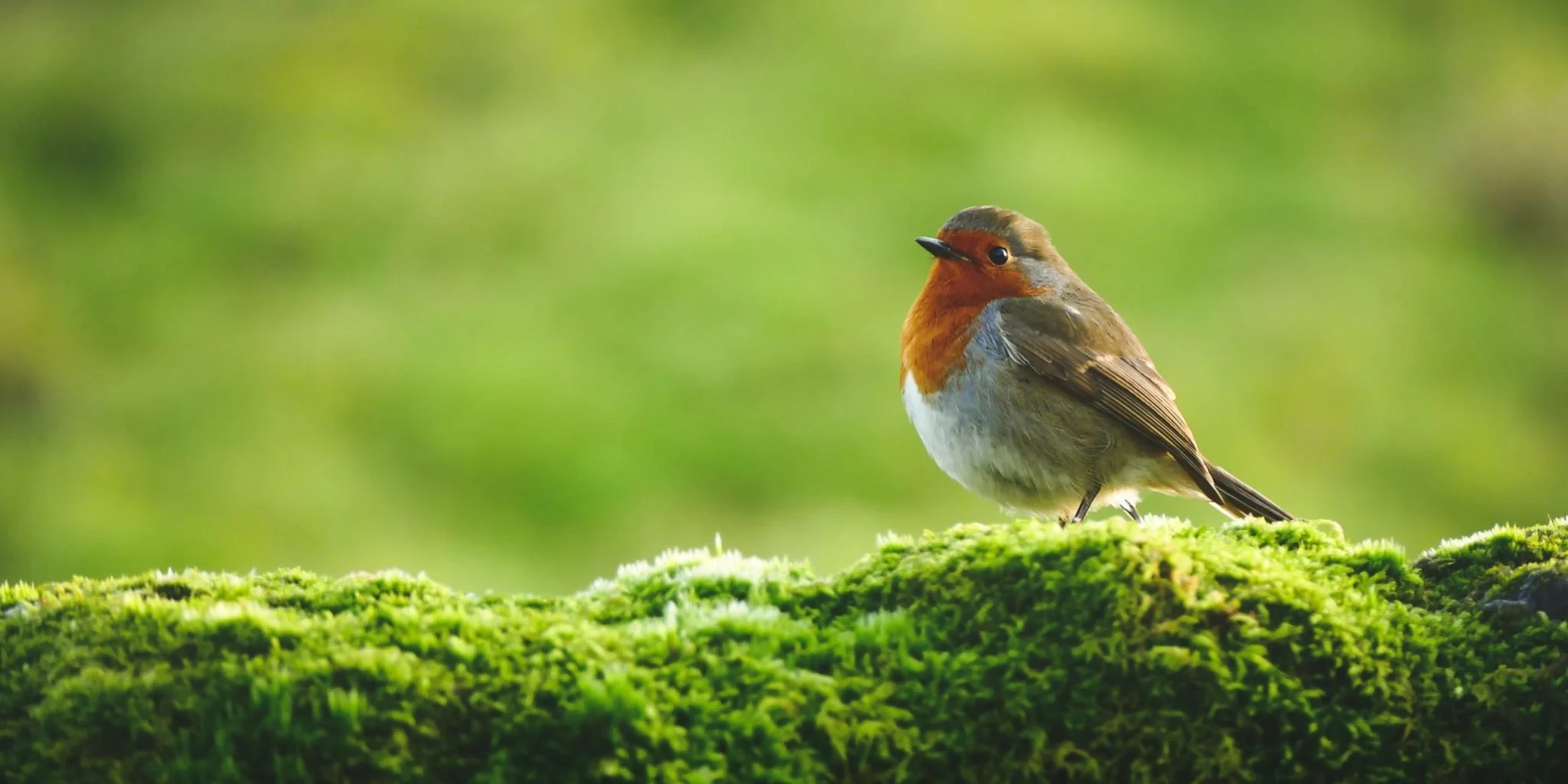
Bird Life at Abney
Abney is the only mature mixed woodland in north Hackney and is one of the finest in central London. The diversity and abundance of plants and trees combined with relatively sympathetic management means the cemetery is of great value to birdlife, hosting a wide range of breeding, wintering and migratory species. A good way to catch up on what has been seen recently is to have a look at the e-bird listings, a link to which is here.
Sparrowhawk can be seen throughout the year with luck and patience but the Tawny Owl pair that used to be in residence have not been seen for quite a long time. There are healthy populations of Great Spotted Woodpeckers (around six pairs), Blackcaps (up to 12 pairs) and Stock Doves (up to 12 pairs), while Green Woodpecker, Chiffchaff, Goldcrest and Coal Tit are also resident / semi-resident in small numbers. Jays, unlike their countryside counterparts, are remarkable showy in Abney.
In autumn, winter and early spring, the cemetery attracts visiting thrushes and finches; of the latter, Lesser Redpoll, Brambling and Siskin are regular visitors in small numbers (with Common Redpoll also recorded, in 2009). In passage periods, expected migrants (again in small numbers) include Willow Warblers, Garden Warblers, Woodcocks and Spotted Flycatchers; rare but near-annual migrants include Pied Flycatcher, Common Redstart, both Whitethroats and even Reed Warbler.
Common Buzzards are annual overhead, with several birds showing interest in putting down (with one doing so in 2008); other flyovers include Kestrels, Red Kites and (extraordinarily) Merlin, while Swifts enjoy the abundance of insect prey in the summer months. Abney attracts more than its fair share of Firecrests, tiny, rare avian jewels particularly fond of ivy-covered tree-trunks; the best times to look for them are April and October. Unfortunately, species such as Lesser Spotted Woodpecker, Nuthatch, Bullfinch and Treecreeper are at best extremely rare vagrants in recent years.
Unexpected breeders include Mallard and Canada Goose, despite the lack of any water source within the cemetery, while the inexorable spread of Ring-necked Parakeets and their unmistakable calls are a permanent fixture.

Image credit: Jack Ferris
For more examples of birds found at Abney, check our Bird Sighting page.
Listen to our Dawn Chorus recordings that capture birdsong at Abney Park:


Plants
Flowers, Herbs and Shrubs
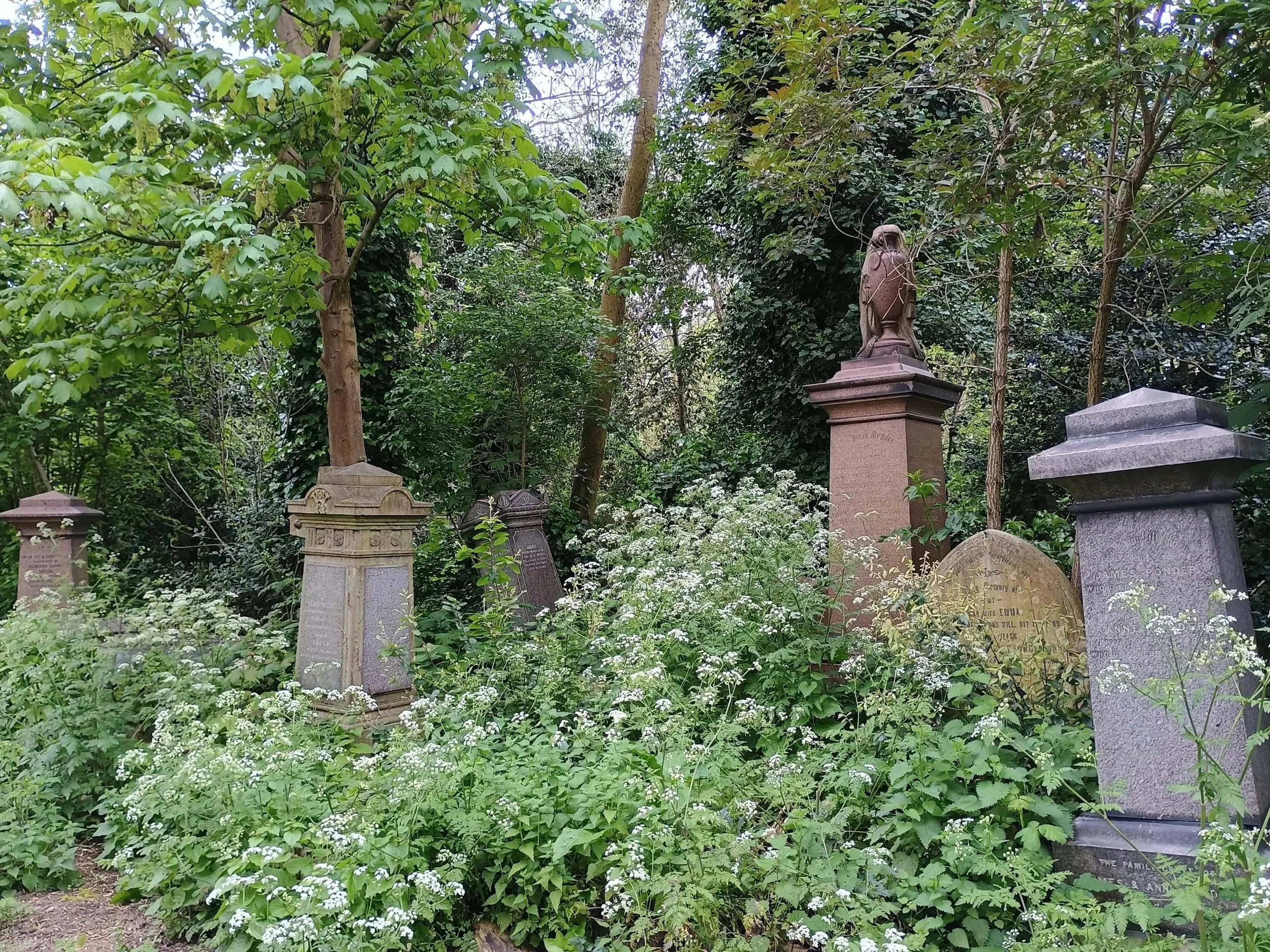
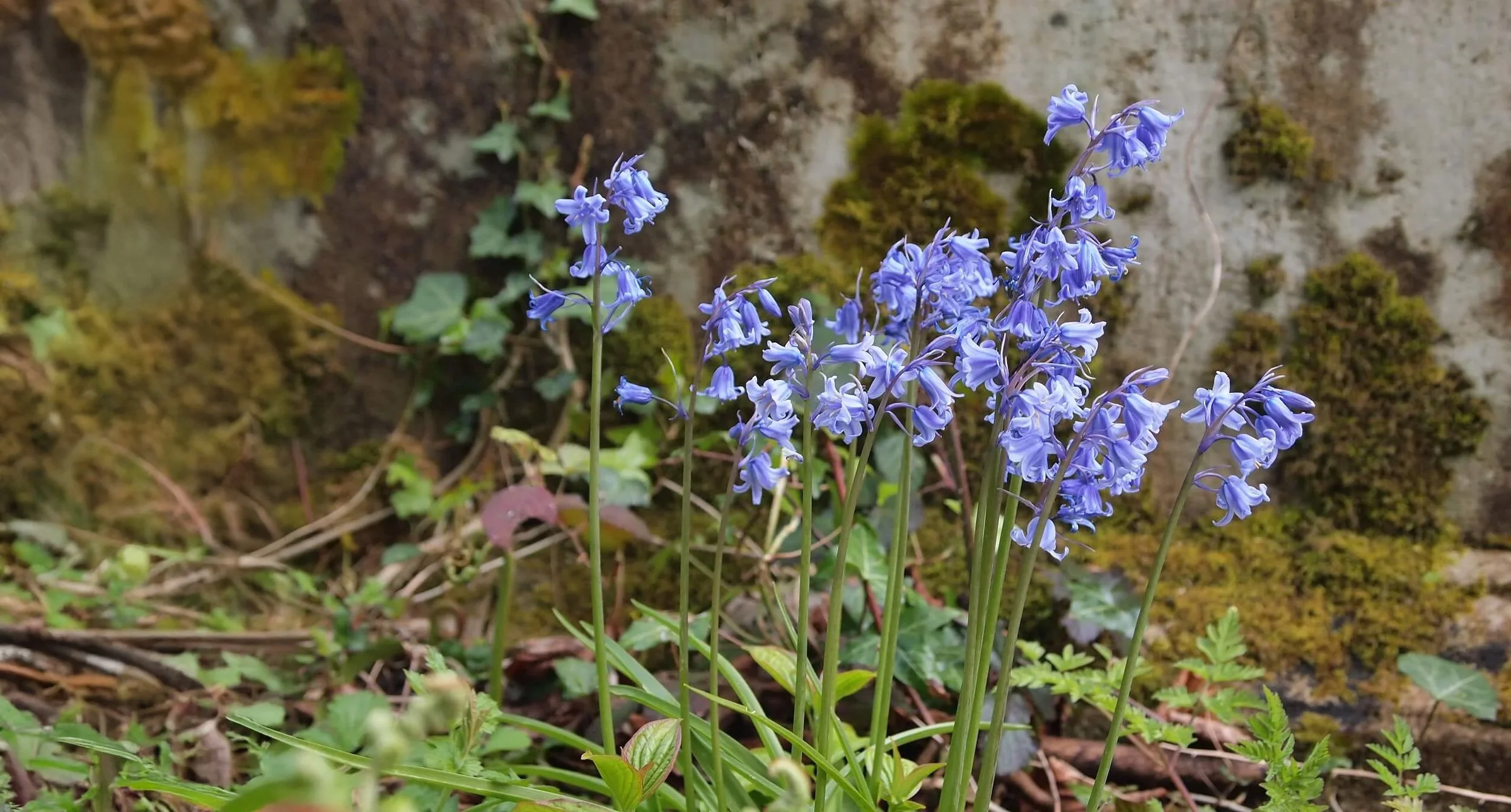
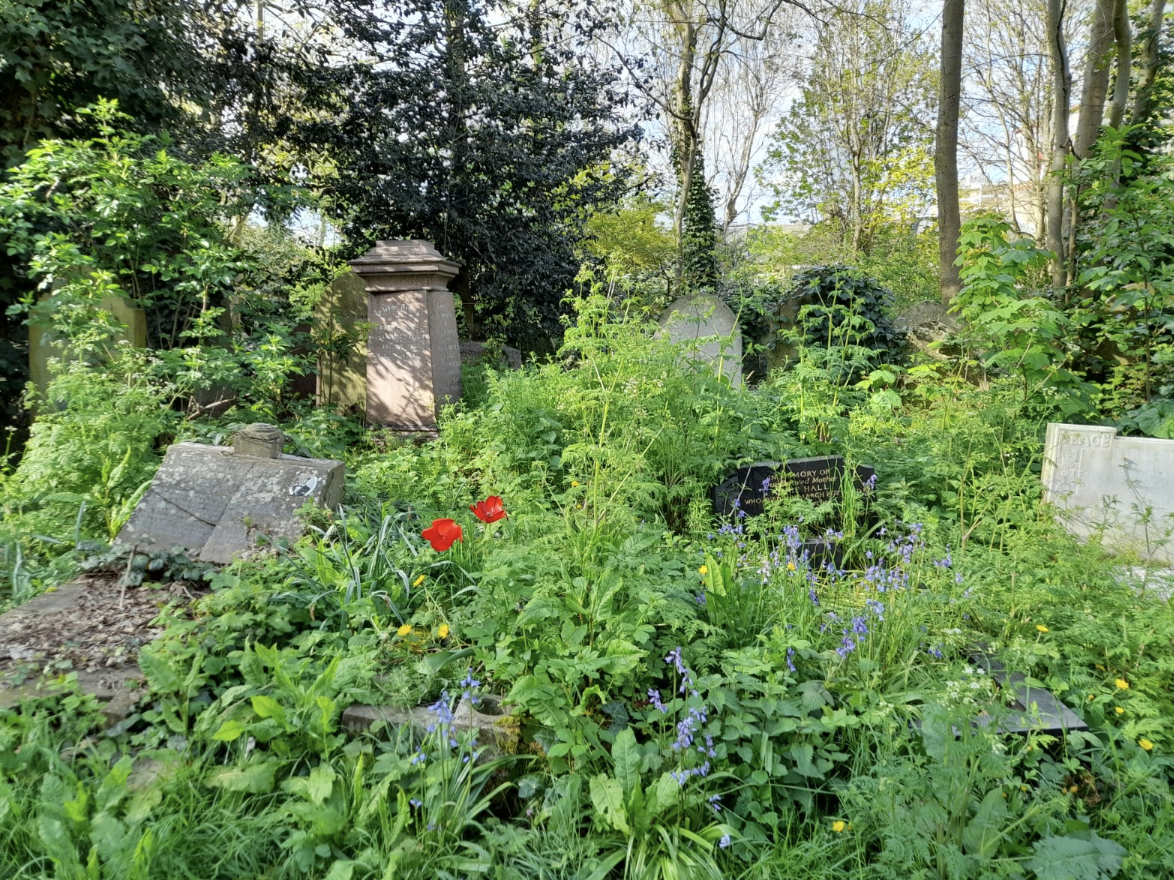
Abney's open rides are a haven for a variety of wild plants and flowers. Spring is a wonderful time to wander through a riot of green dotted with delicate flowers in all colours. The pretty pink flowers of herb robert attract bees. Wild garlic sports spiky balls of white petals. And bluebells and crocuses cluster together in riots of colour.
What may look like neglected overgrown ground is valuable habitat: nettles and grasses are needed by butterflies and their caterpillars to feed and breed.
Help to preserve our nature reserve
Remember - Abney is a nature reserve so please don't pick anything and leave the flowers and plants for others to enjoy.
Bugs & Butterflies
Insect life at Abney Park
Abney's insects are perhaps the stars of this valuable ecosystem – doing vital work pollinating, breaking down dead wood and being food for other animals!
Though they can be overlooked, once you start looking and listening, especially on hot spring and summer days, you'll see and hear the most wonderful display.
At first you may think the buzzing is all coming from bumble bees, and there are many species of bumble bee pootling around Abney's blossoms.
The Pocota personata looks like a bumble bee but is in fact a hoverfly in bumble costume. Very rare, it was last recorded in London in 1966. Proof of the importance of Abney's veteran poplars, the larvae develop in rot holes high up in old trees.
A genuine bee, and also genuinely scarce, that lives in Abney is the girdled mining bee (Andrena labiata). These are solitary mining bees so they live alone in underground chambers, but many nest next to each other. Girdled mining bees are nationally scarce because they only live in parts of SE England.
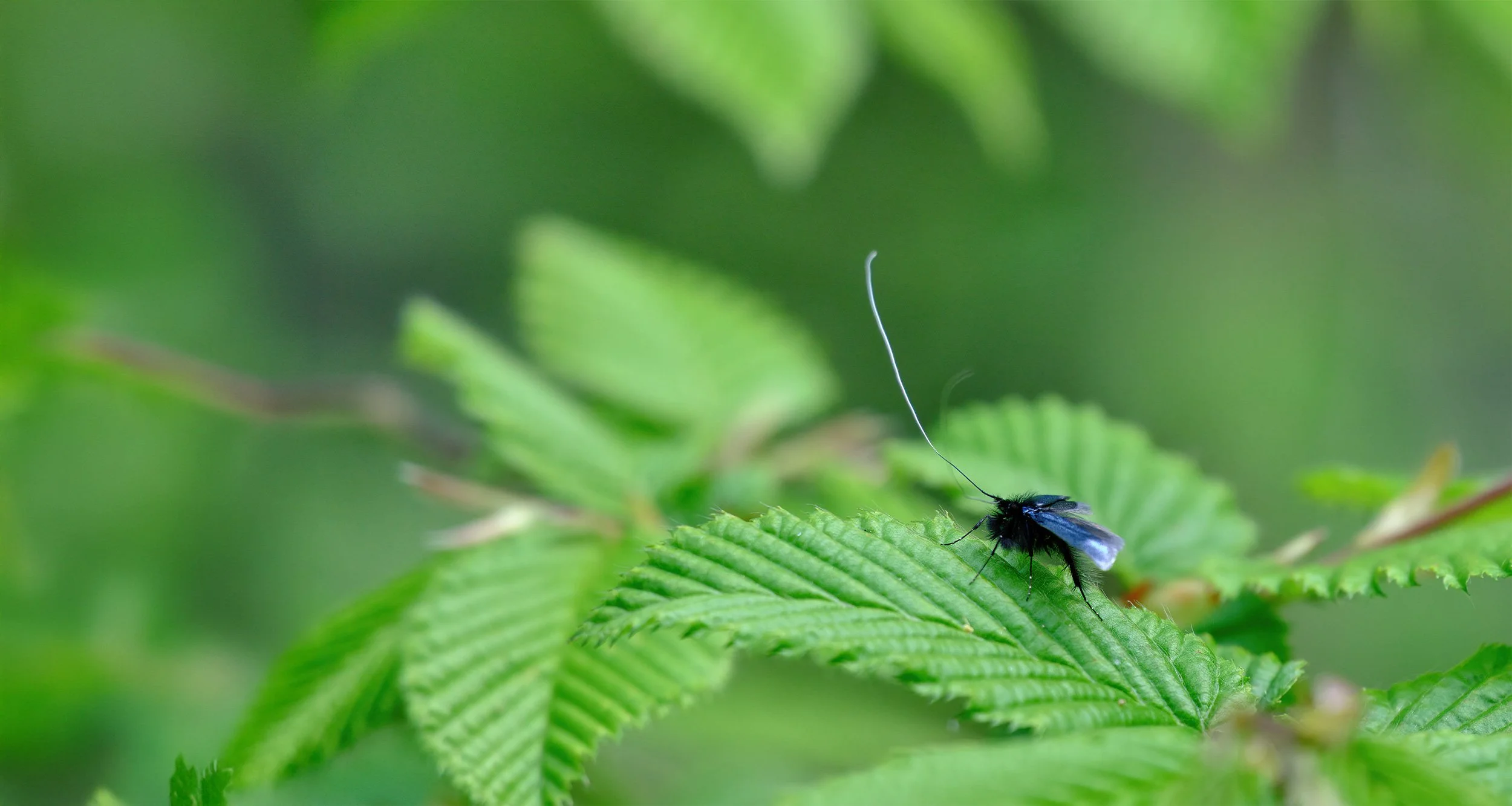
Abney is also home to some beautiful and rare moths and butterflies, such as the Adela reaumurella – part of a group of micro moths called longhorns (for obvious reasons). Their larvae feed on dead oak leaves.
There are hundreds more species of crawling, scuttling, burrowing, slithering and fluttering invertebrates all over Abney Park.

Fungi
Mushrooms, Moulds and More
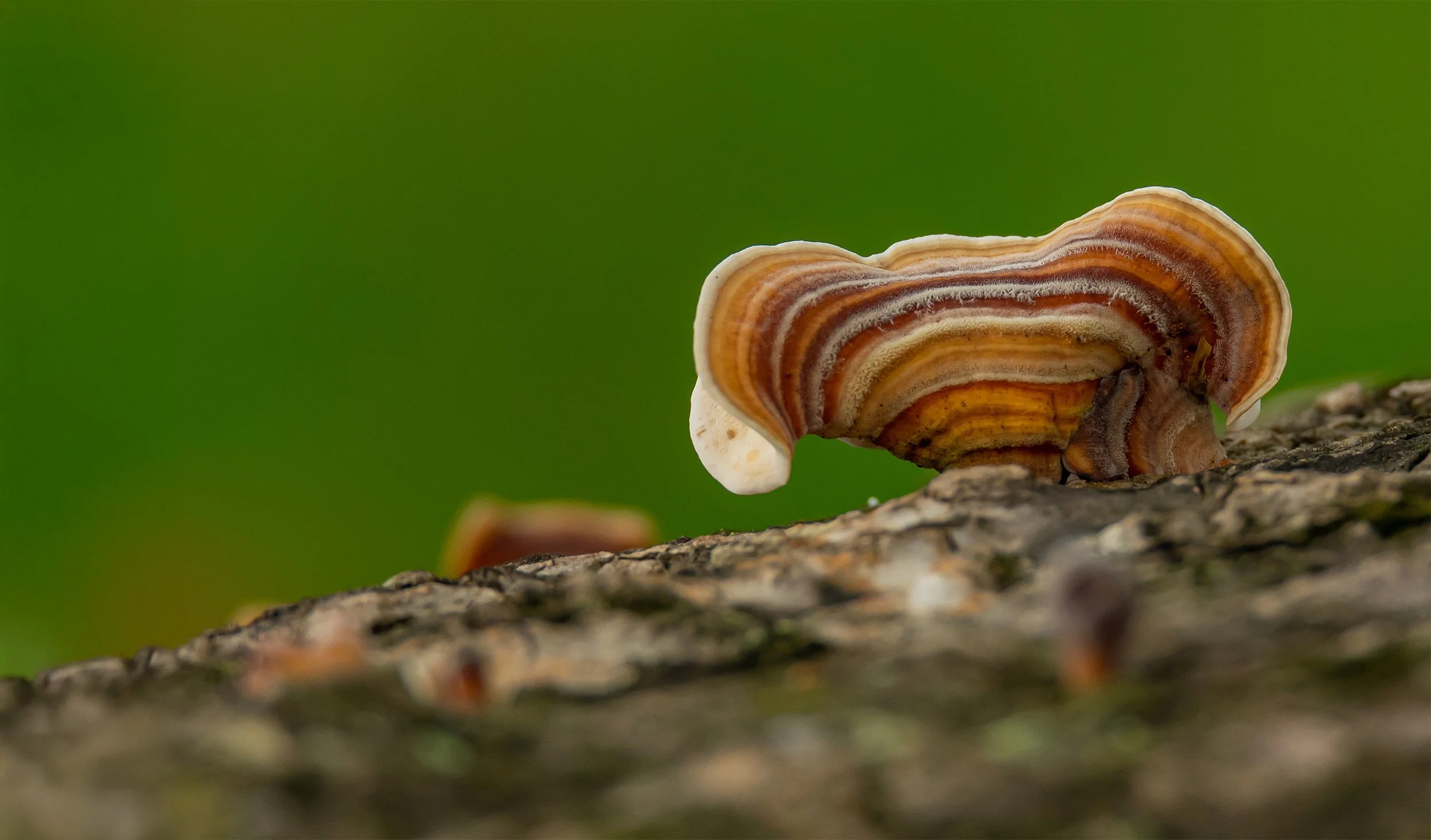
Abney is home to many species of fungi, some quite rare and/or unsual in London. As an old woodland, there's lots of rotting wood, which is an important part of a healthy ecosystem, releasing nutrients back into the soil, making them available again. Playing their part in this process are a lot of fungal species that feed on wood, such as inkcaps.
It's not advisable to forage any ground fungi in Abney; there are some species that look like field mushrooms, but these are usually Yellow stainers (Agaricus xanthoderma) which are not edible. Even edible species are likely to be full of arsenic (from the Victorian embalmed bodies) and lead (from the Victorian lead lined coffins and the London car pollution) and should really carry a Government Health Warning as a result.
Abney is also home to slime moulds. Slime moulds are strange things. They have a feeding phase where they grow through whatever it is they feed in. Then they change. They move very slowly (you won’t see this happening if you stare at them), and develop spore producing structures, often in bright colours.
For more information on fungi at Abney, check out our Fungi Update page.