
History of Abney Park
Overview
In the early 1800s, London’s rapid population growth proved too much for inner city burial grounds, which were literally overflowing. Parliament passed a bill in 1832 to encourage the establishment of new private cemeteries. Within ten years, seven had been established (later dubbed 'The Magnificent Seven' by architectural historian Hugh Meller), one of which was Abney Park.
The site of Abney Park was formed from the estates of Fleetwood House and Abney House, the latter of which had been the home of renowned non-conformist and hymn writer Isaac Watts. This association quickly made Abney the foremost burial ground for Dissenters – those practising their religion outside the established church. It was founded on these principles, with a non-denominational chapel at its core, and was open to all, regardless of religious conviction.
Uniquely in London, Abney was also originally laid out as an arboretum, with 2,500 varieties of plants. An alphabetical planting of tree species was set out around the perimeter along with collections of oaks, thorns, pine and others within.
In the 1970s after the cemetery company went into administration, Abney fell into disrepair and was abandoned, allowing a uniquely wild atmosphere to develop at the site. The London Borough of Hackney took over ownership of the site in the 80s and started to manage it in partnership with the Abney Park Trust.
It was decided to maintain and manage this new and unique urban wilderness and today management aims to balance the needs of Abney's wildlife with the requirements of the historic landscape and structures as well as the Park's memorial role.
Timeline
-
![A watercolor painting of a large, old, yellow building with multiple windows and a gated entrance. Two adults and a child are standing outside, along with a small dog. There are trees on either side of the building.]()
1840: Cemetery Established
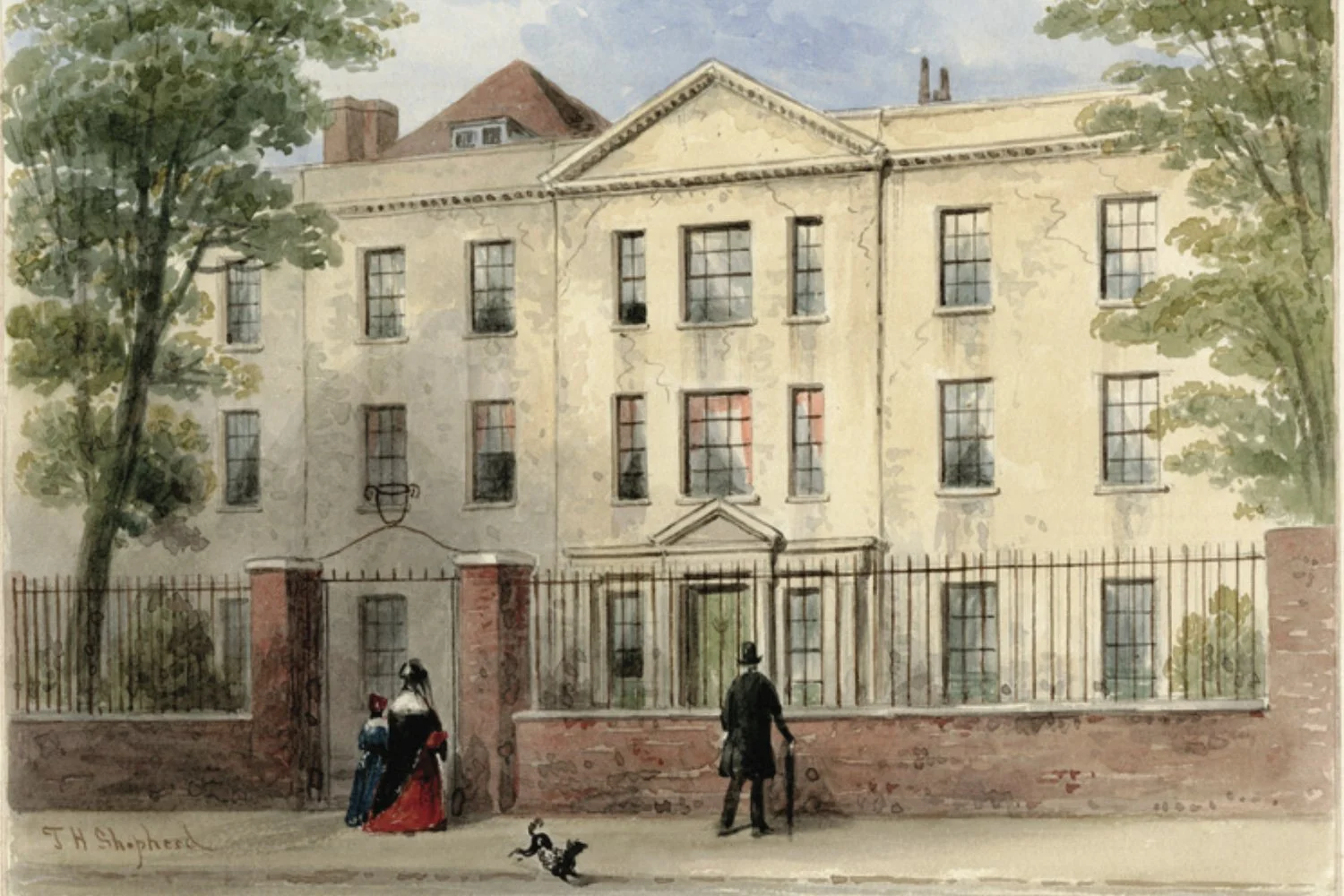
The site of Abney Park Cemetery was established in 1840 from the grounds of Abney House and Fleetwood House. Abney Park was one of seven new cemeteries built outside the City to meet the new demand of a rapidly growing population due to the Industrial Revolution. Abney Park Cemetery Company ran the cemetery, and its first funeral was on 3 June 1840. Rev James Mather was the first person to be buried in Abney Park – his grave lies partially hidden to the north of the chapel.
Watercolour of Fleetwood House by TH Shepherd, 1844, © Hackney Archives
-
![An old, black-and-white drawing of a Gothic-style church chapel with a tall steeple, surrounded by trees, labeled as the east front of Abney Park Cemetery Chapel.]()
1840s: Aboretum & Rosarium
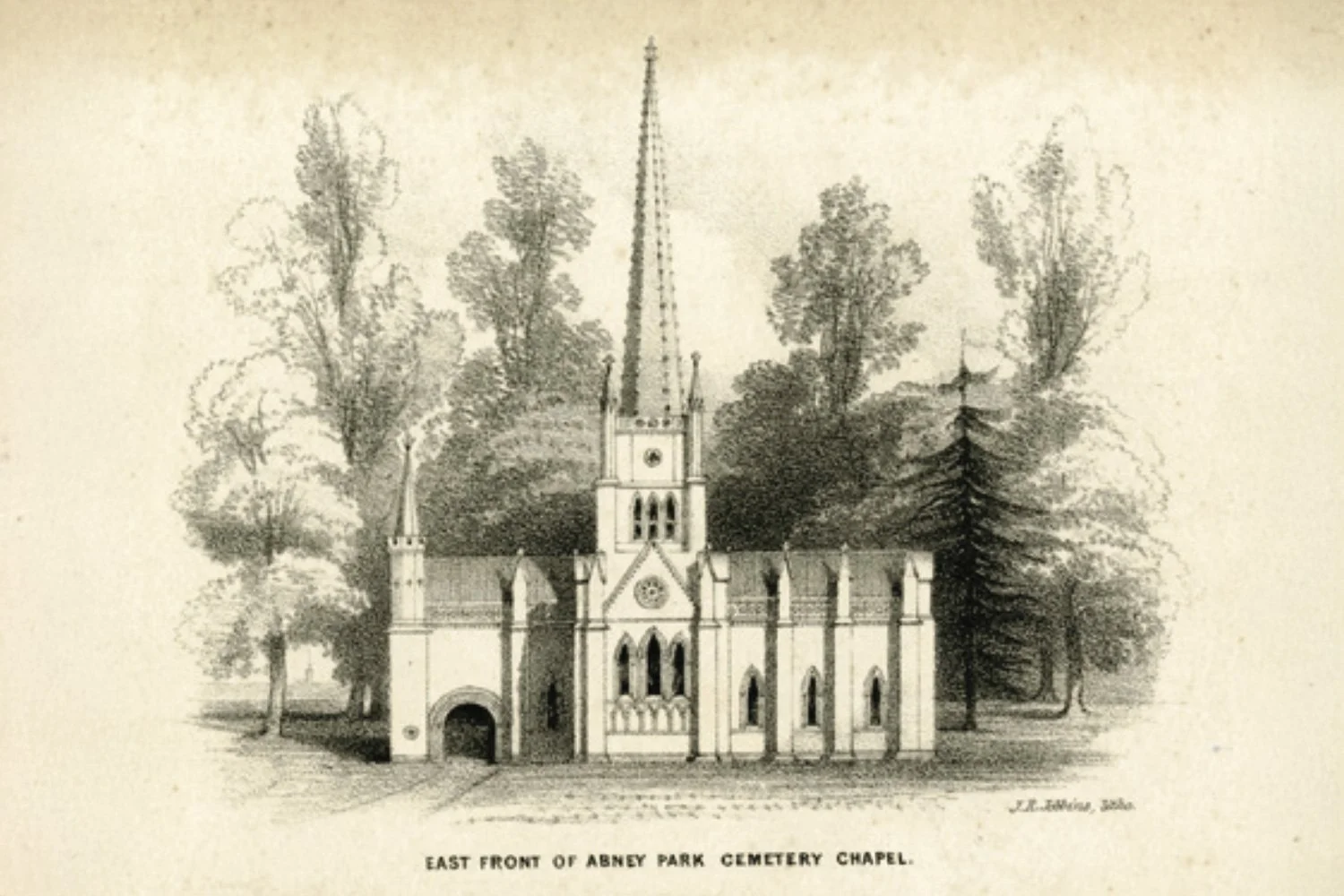
The first stone for the chapel was laid in 1840. The plan for the cemetery was to create an arboretum to display trees from around the world in a public, urban green space, with burial plots in a beautiful setting. Abney was planted with an extraordinary collection of some 2500 trees and shrubs, and some 1000 varieties of rose. Abney House was demolished in 1843 and its site became part of the cemetery. The House’s iron gate and railings to Church Street remained – and still remain – as a second entrance.
Lithograph by JR Jobbins c. 1840, © Hackney Archives
-
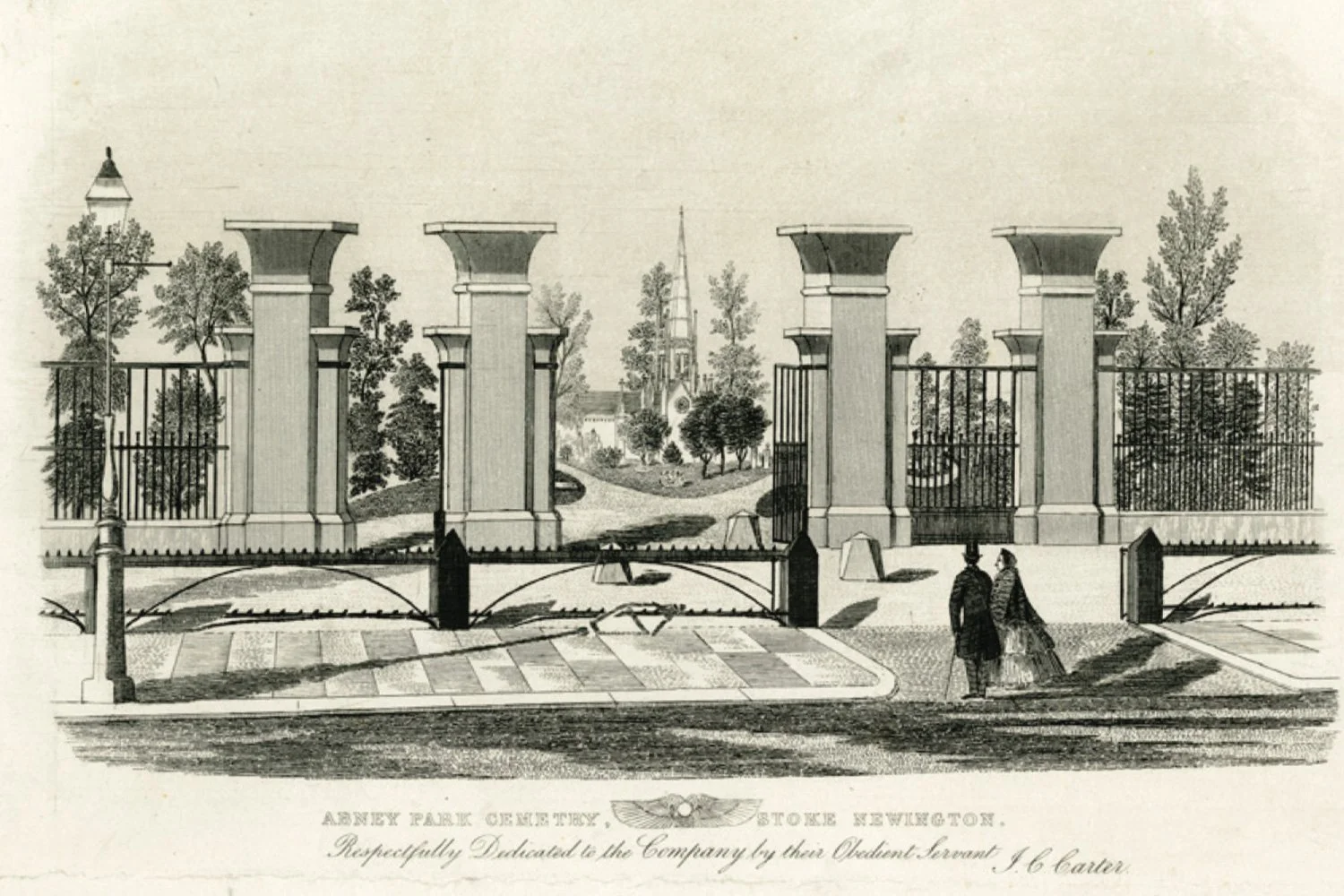
![Black and white illustration of the entrance to Asbury Park Cemetery, showing large pillars, iron gates, trees, and two people walking.]()
1850s-1880s: Influx of Burials
The cemetery company flourished, recording more than 5,000 burials in the first decade, rising to nearly 9,000 for 1850–55. The demand for burial space and particularly common graves for the poor was such that in 1860 the burial area was expanded over the ornamental planting on the boundary. When Hackney Brook was culverted (put underground), the boundary wall moved to the northernmost edge of the site to make more space for graves. The cemetery became less of a garden as it became filled with graves.
Engraving by JC Carter c. 1850, © Abney Park Cemetery Company
-
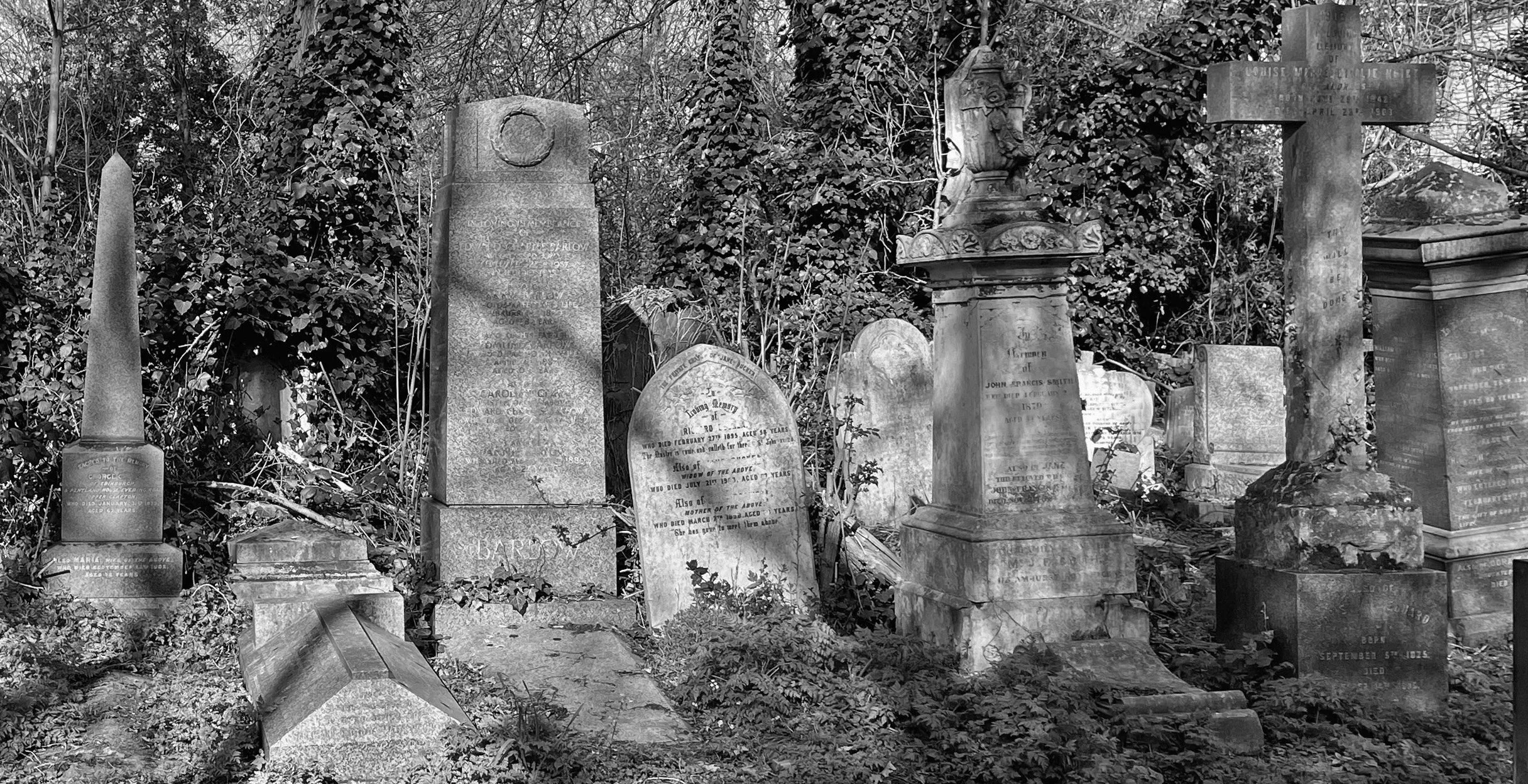
![Black and white photo of old, weathered old gravestones and monuments in a cemetery, surrounded by overgrown grass and bushes.]()
1890s-1960s: Cemetery Capacity
Early twentieth-century photographs show a cemetery near capacity. After 1900 new grave plots were created by infilling between existing ones and by narrowing the paths. There appears to have been a significant re-use of old plots, in some places by raising the ground level. 1500 people were still buried each year throughout the next few decades.
-
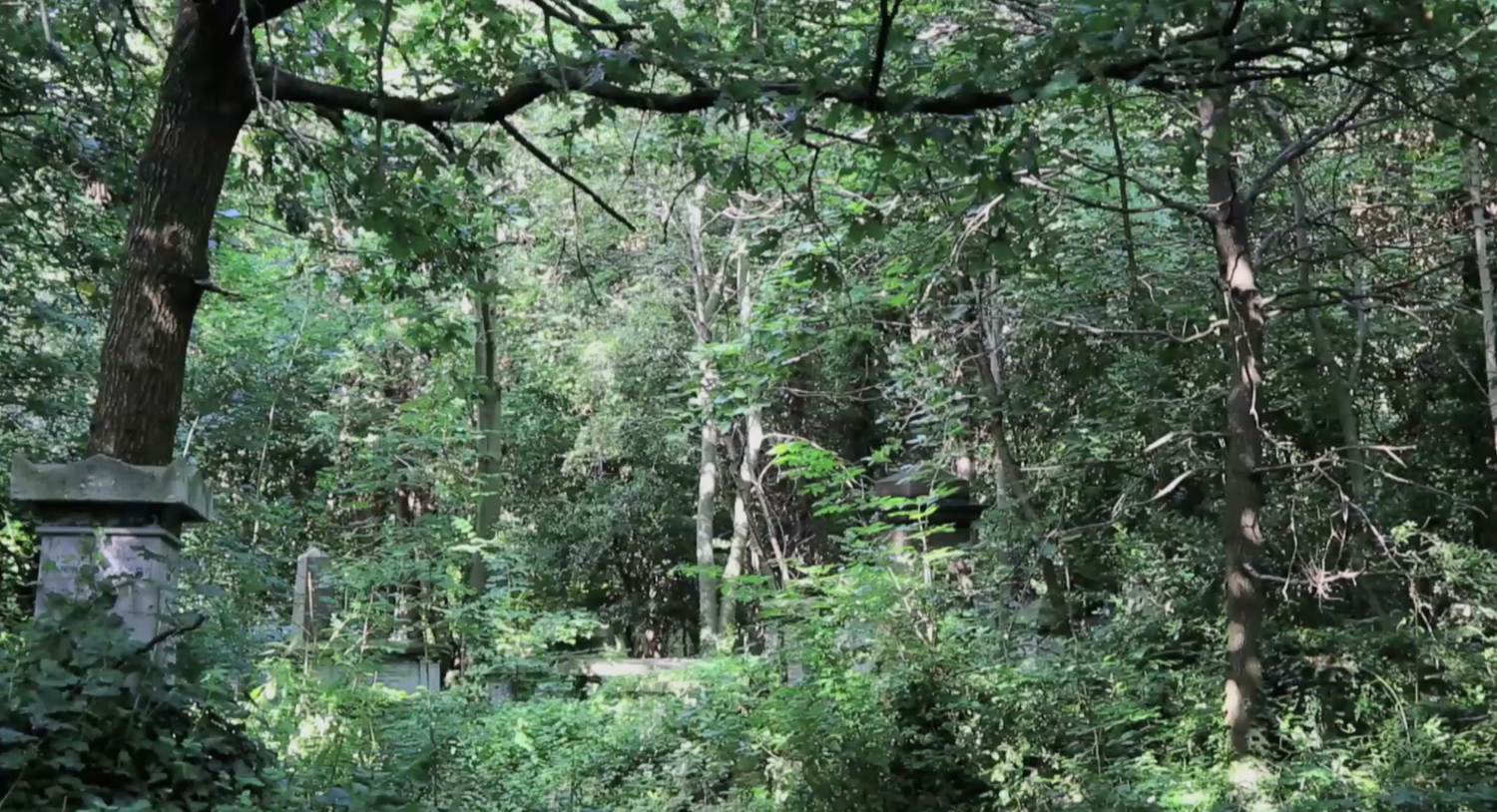
![Dense green forest with various trees and bushes, dappled sunlight filtering through the leaves.]()
1960s-1979: Falling Into Disrepair
From 1960 onwards there was very little maintenance because burial space had run out, causing a drastic drop in income. Japanese knotweed (Fallopia japonica), sycamore, bramble and ash rapidly colonised the open areas. During this time, the chapel also fell into disrepair. Save Abney Park Cemetery (SAPC) was formed in August 1974. In 1979 the cemetery company was declared bankrupt and Hackney Council purchased the land and buildings of the park for £1.
-
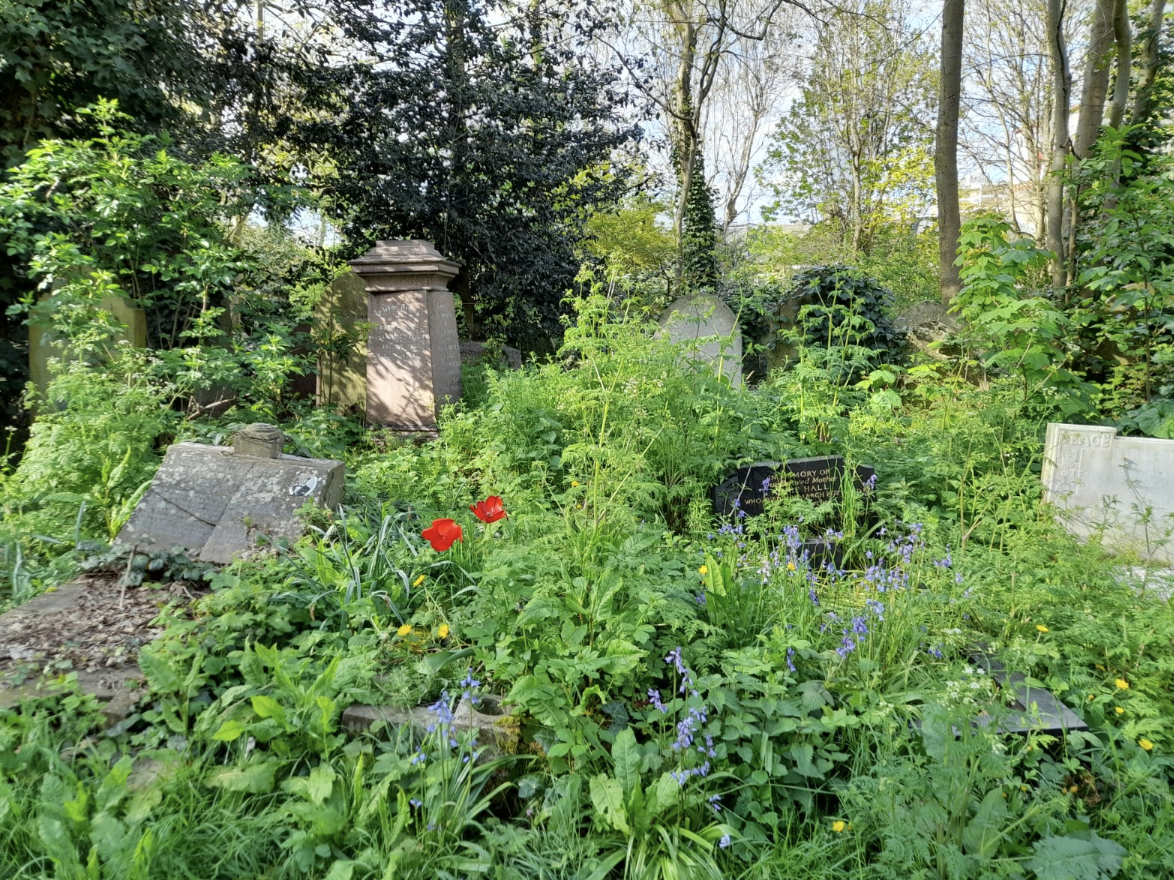
![Overgrown historic graveyard with various old tombstones and monuments covered in greenery and wildflowers, including red and purple flowers.]()
1979-1990: Council Involvement
In 1979, apart from one forecourt building, the park passed to the local council as a burial ground and open space subject to the Local Authorities Cemeteries Order of 1977. For the following decades, there were only a small number of burials, where families had previously held deeds from the cemetery company; but by and large nature was allowed to take over.
-
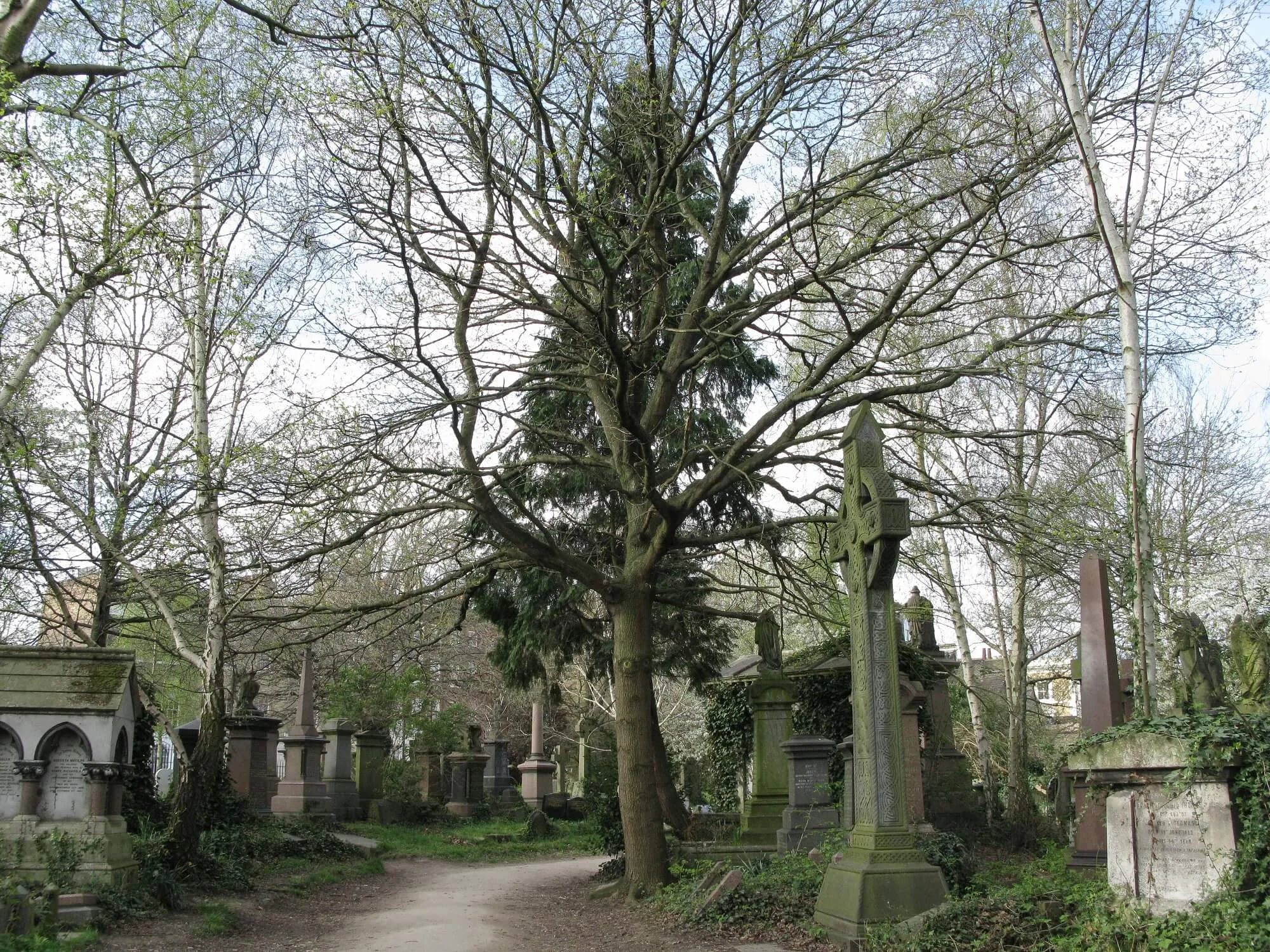
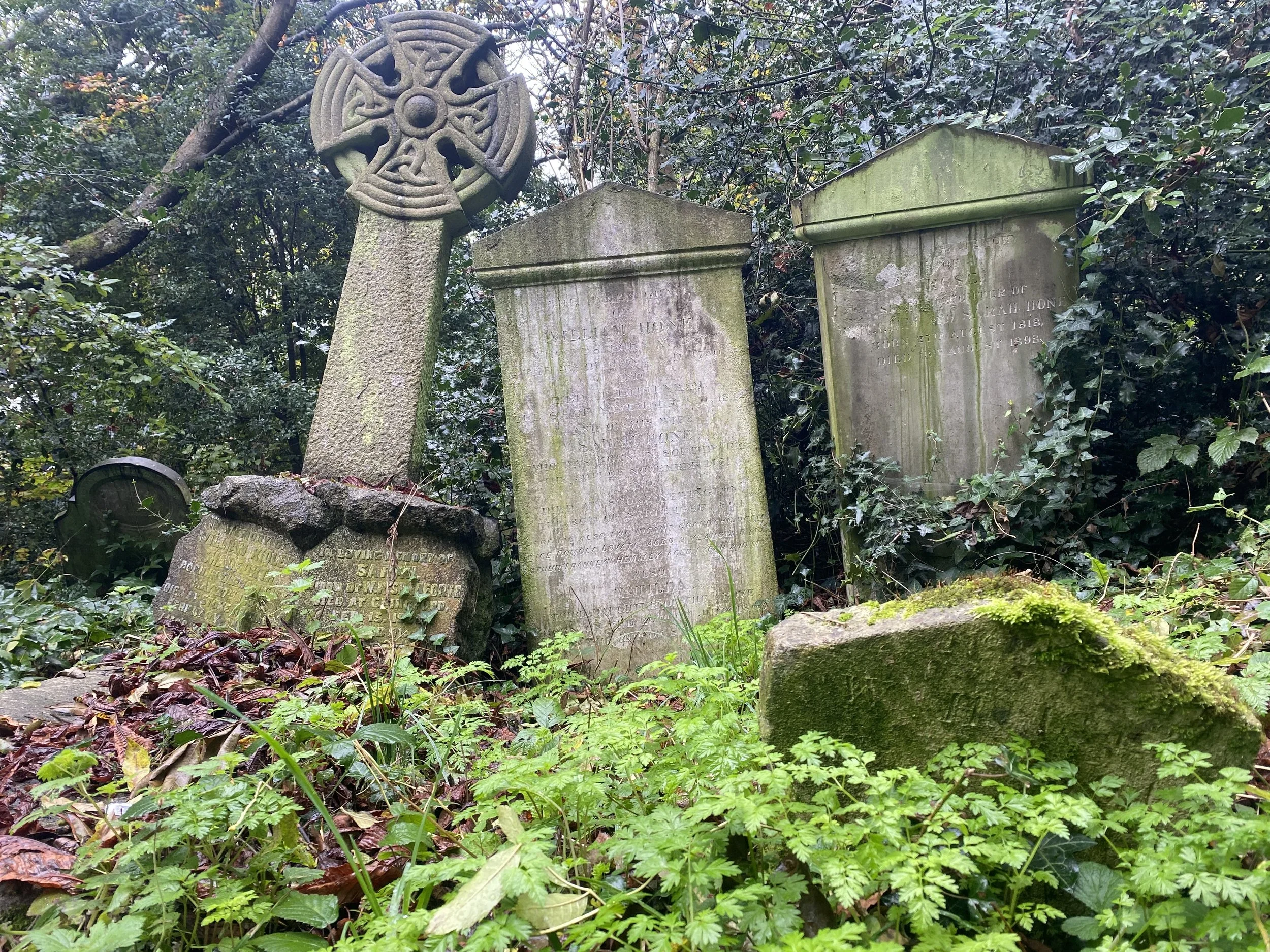
![Old weathered gravestones and a Celtic cross in a lush, overgrown cemetery]()
1991 - 2015: Abney Park Trust & Council Cooperation
Save Abney Park Cemetery became The Abney Park Trust in 1991 with the ambition of promoting and preserving the unique heritage of Abney Park Cemetery.
The Trust is a non-profit charity that managed the site from 1991 to 2015. In 2015 Hackney Council took back management of the site and both are now successfully working together to preserve and improve all aspects of the site – the biodiversity, ecology, conservation and history.
-
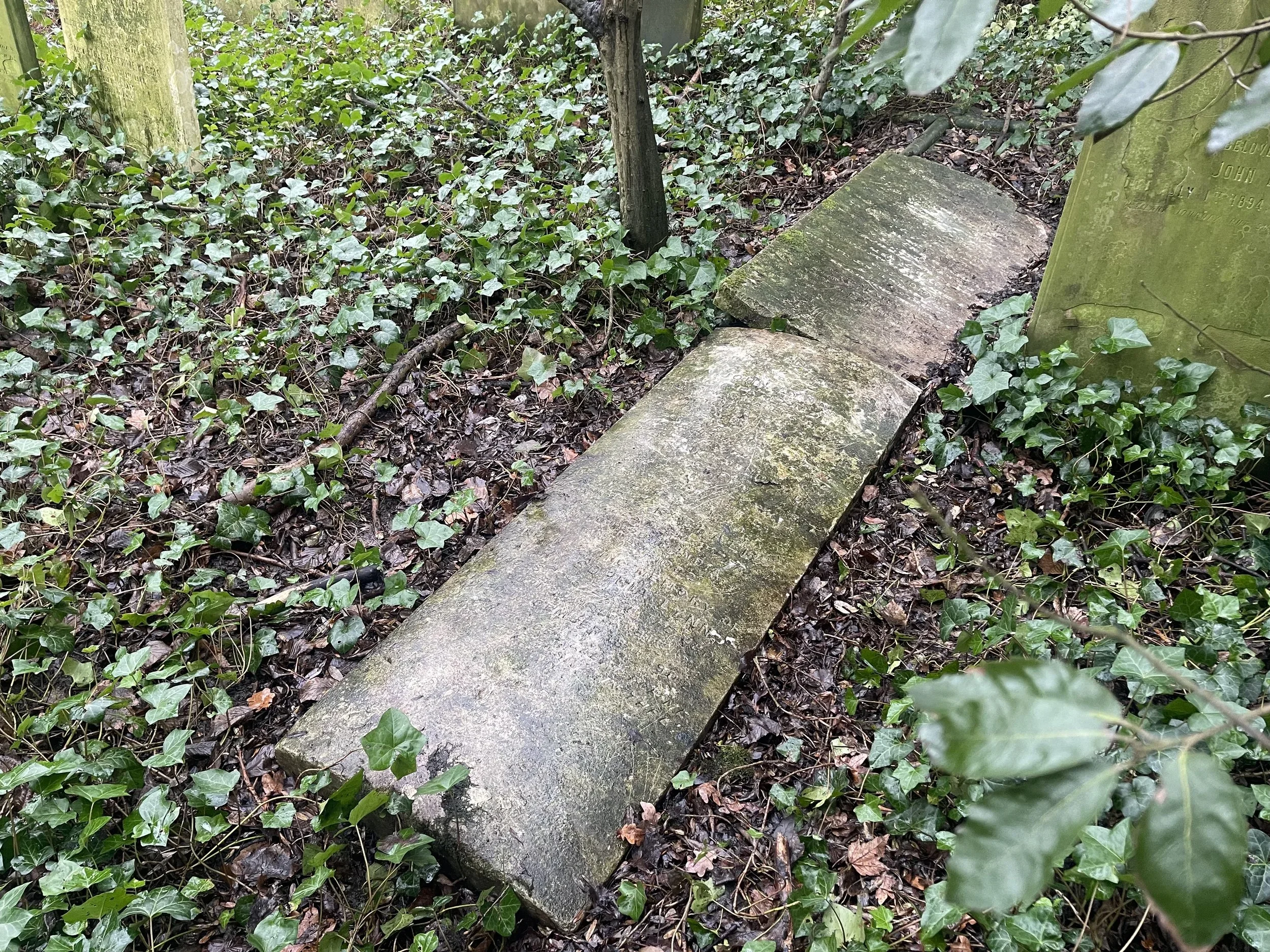
![A weathered stone grave marker lying flat on the ground among green ivy and leafy plants in a wooded area.]()
2016-2023: Abney Unearthed
Abney Unearthed was a project to re-map Abney Park’s 200,000 burials. Volunteers worked to create a map of graves, to add missing information to the burial records, and to research and bring to light the life stories of the residents of the cemetery. The project initially began with funding allocated from the Heritage Lottery Fund (now The National Lottery Heritage Fund) and Hackney Council in December 2016. Hackney Council continued to fund the project throughout 2019 and 2020. A National Lottery Heritage Fund grant enabled the project to continue until 2023.
-
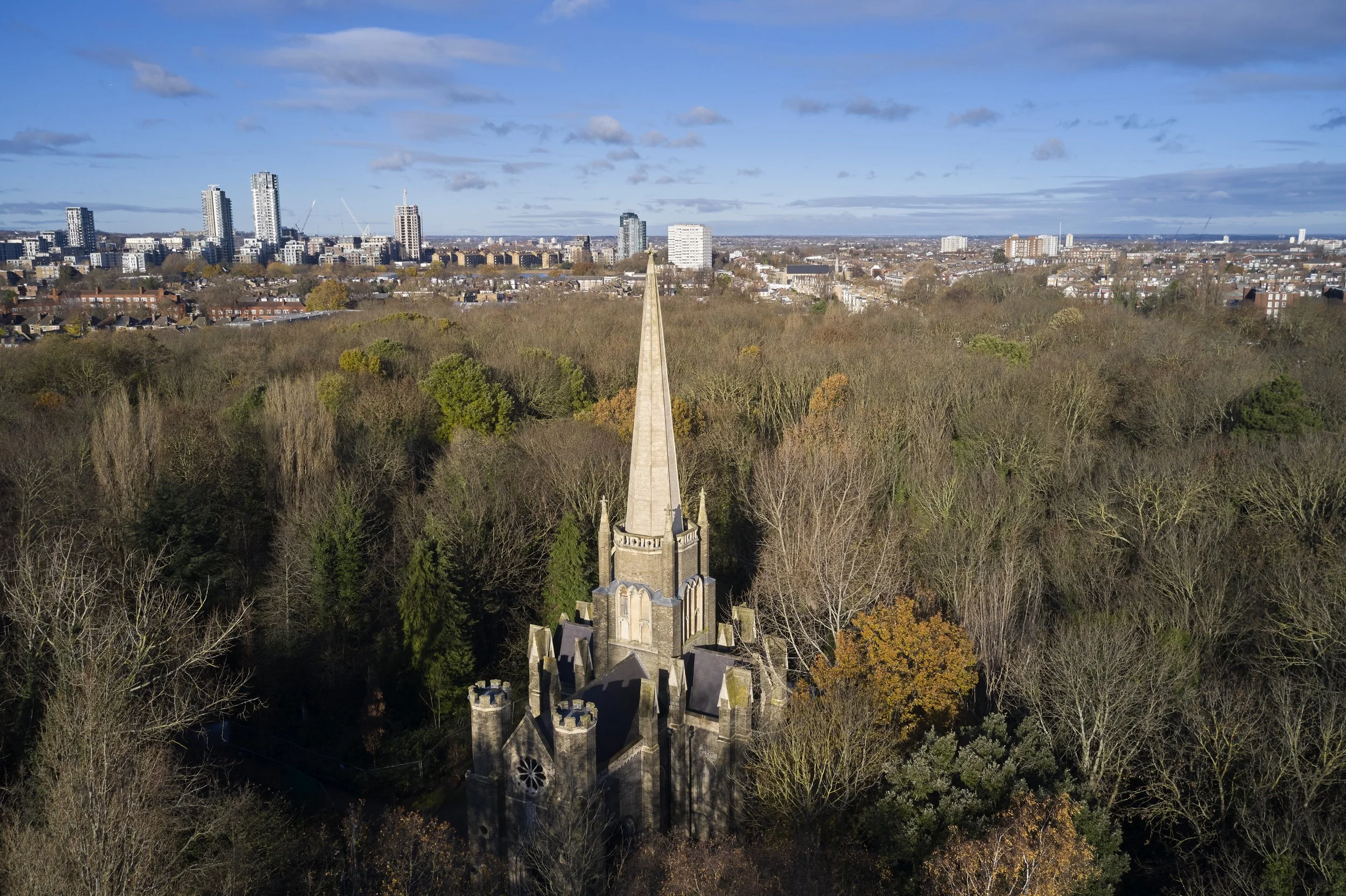
![Aerial view of a small church with a tall steeple surrounded by leafless trees, with a city skyline of high-rise buildings and a clear blue sky in the background.]()
2017: Chapel Roof Repair
The chapel roof was repaired in 2017 with a grant from the National Lottery Heritage Fund.
-
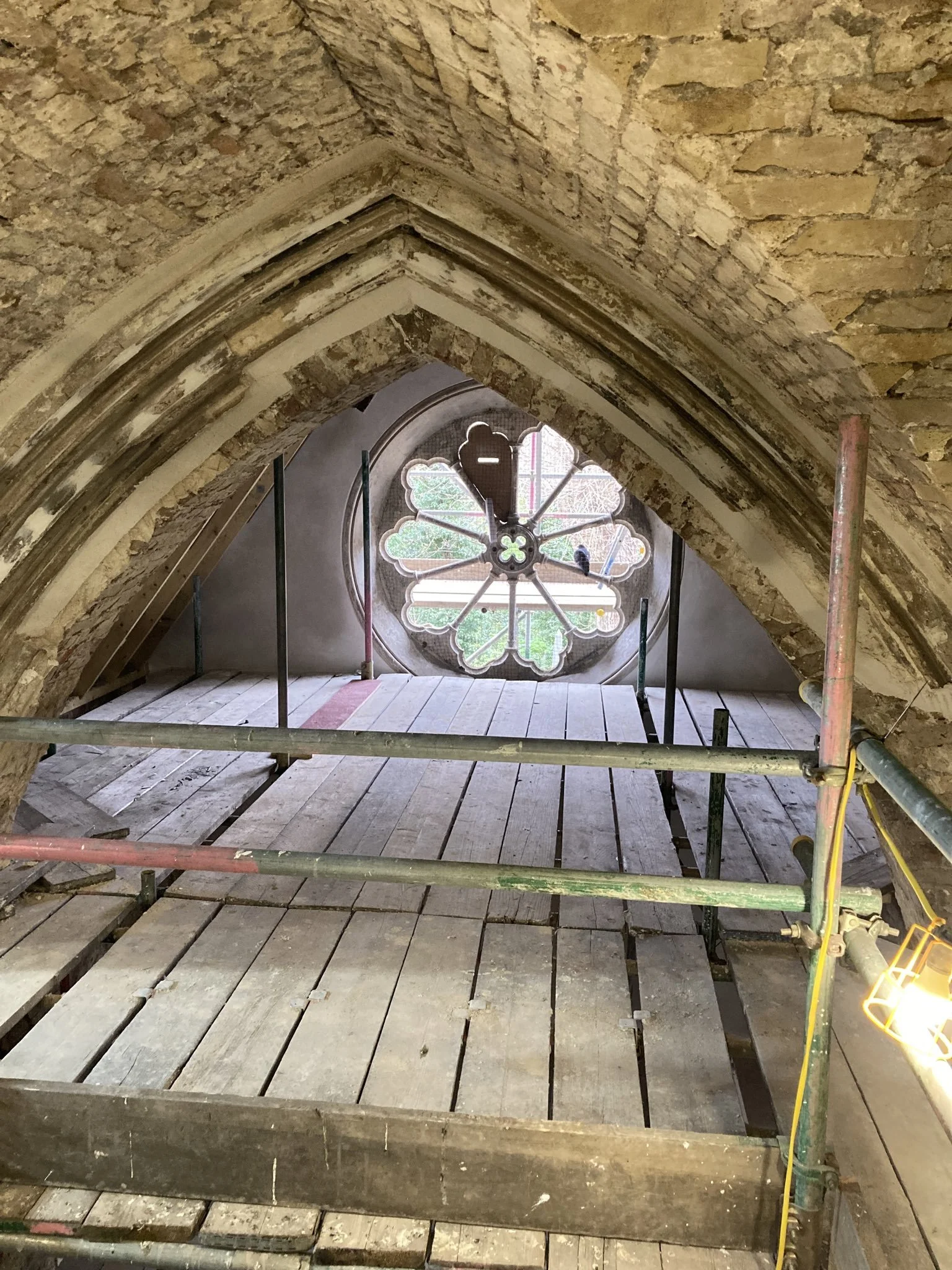
![View from inside a building under renovation, looking out a small arched window with a decorative cross-shaped design, with scaffolding and wooden planks on the floor.]()
2021-2024: Major Restoration Project
Abney Park Trust and Hackney Council worked to protect the park for future generations with a major restoration project funded by the National Lottery Heritage Fund. The project included restoration of the chapel, building a new cafe and education space, creating a new more accessible entrance and improvements throughout the cemetery.
-
![Interior view of a church or cathedral with a stained glass rose window at the back, brick archways, wooden ceiling, and modern hanging light fixtures.]()
2024-Present: Restored and Revitalised
In 2024 following the completion of the major restoration project, Abney Park Cemetery was officially removed from the Historic England “At Risk” Register. During 2024 and beyond, the park has been in active use as a community space, hosting a range of events and activities, as well as continuing its purpose as a contemplative garden for walks and enjoyment of nature in a historically rich setting.

More about our history and heritage
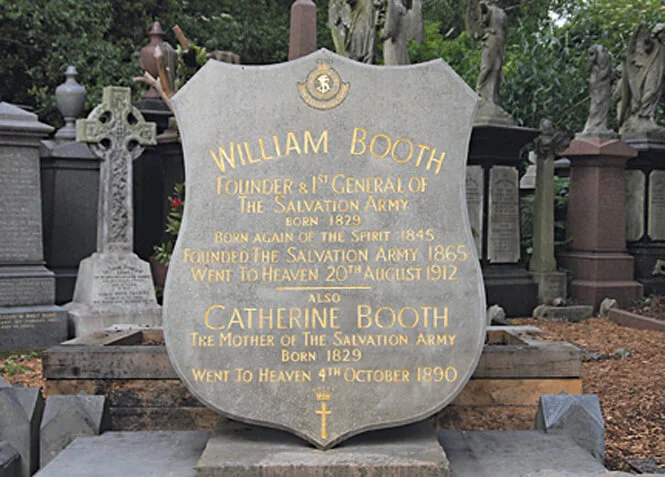
Residents
Find out about the famous, historically significant and other interesting people buried in Abney Park
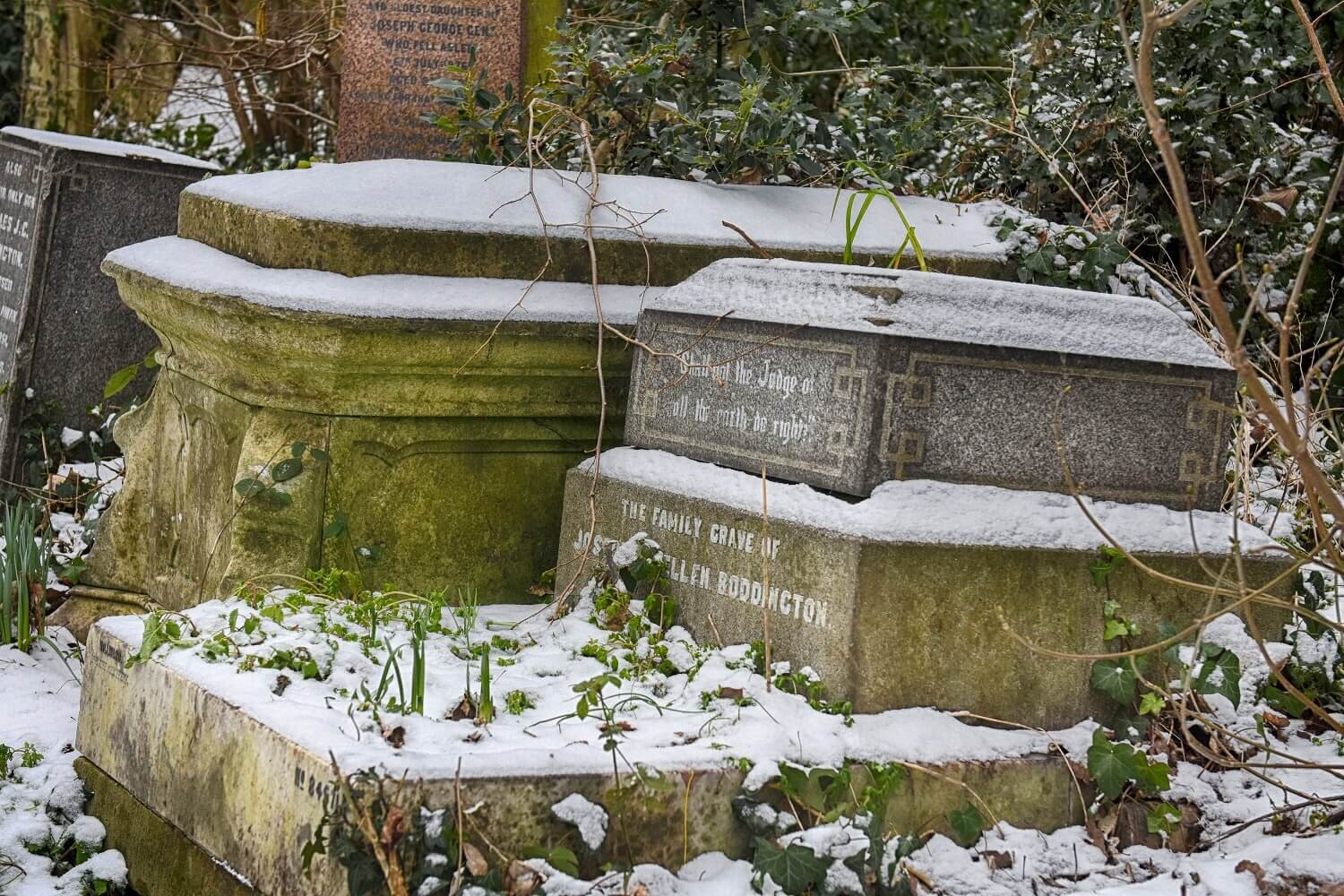
Abney Unearthed
An extensive project to re-map the cemetery and to research the life stories of residents
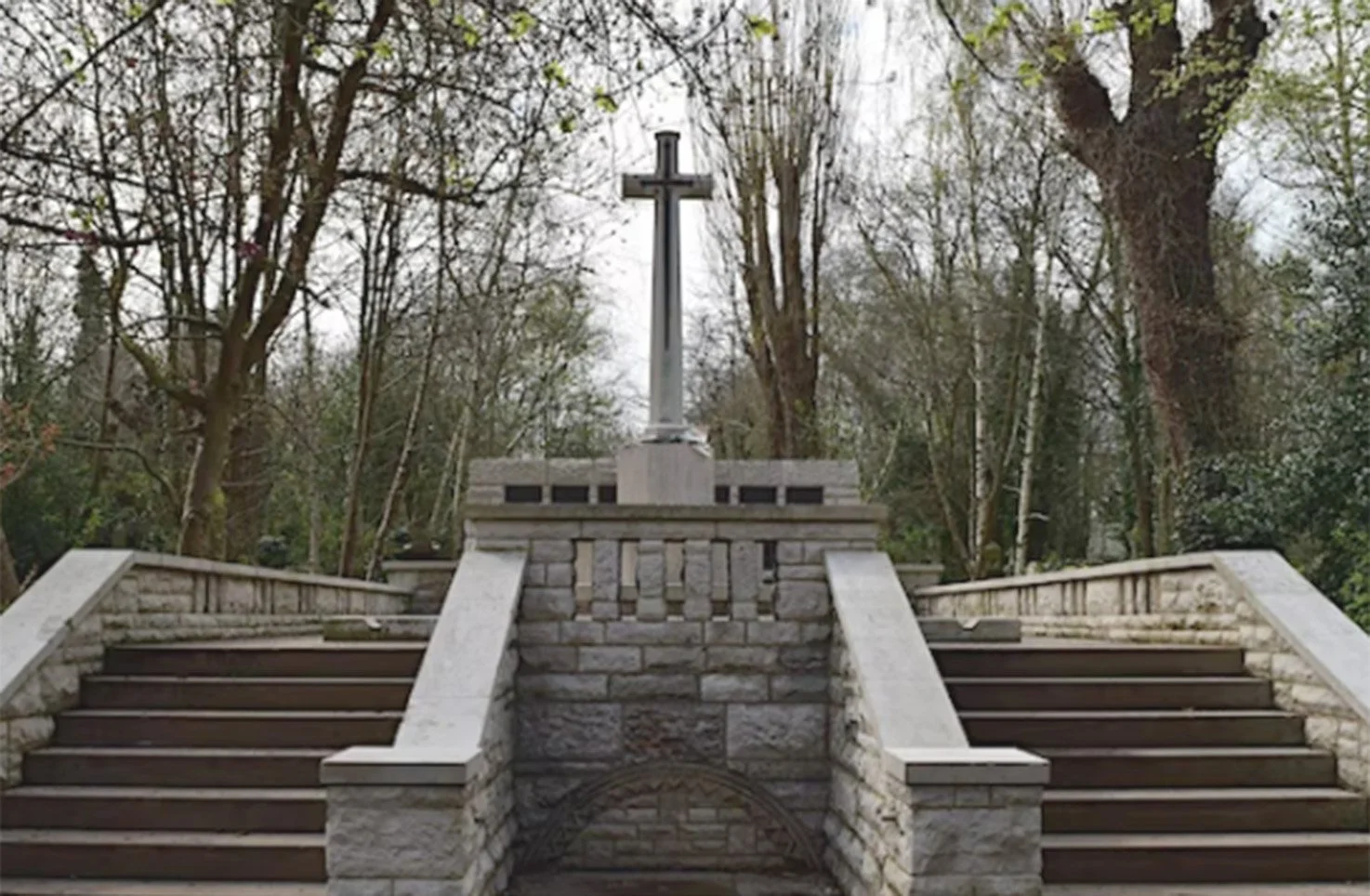
Monument Restoration
Learn about recently restored monuments and graves at Abney Park Cemetery