Chapel
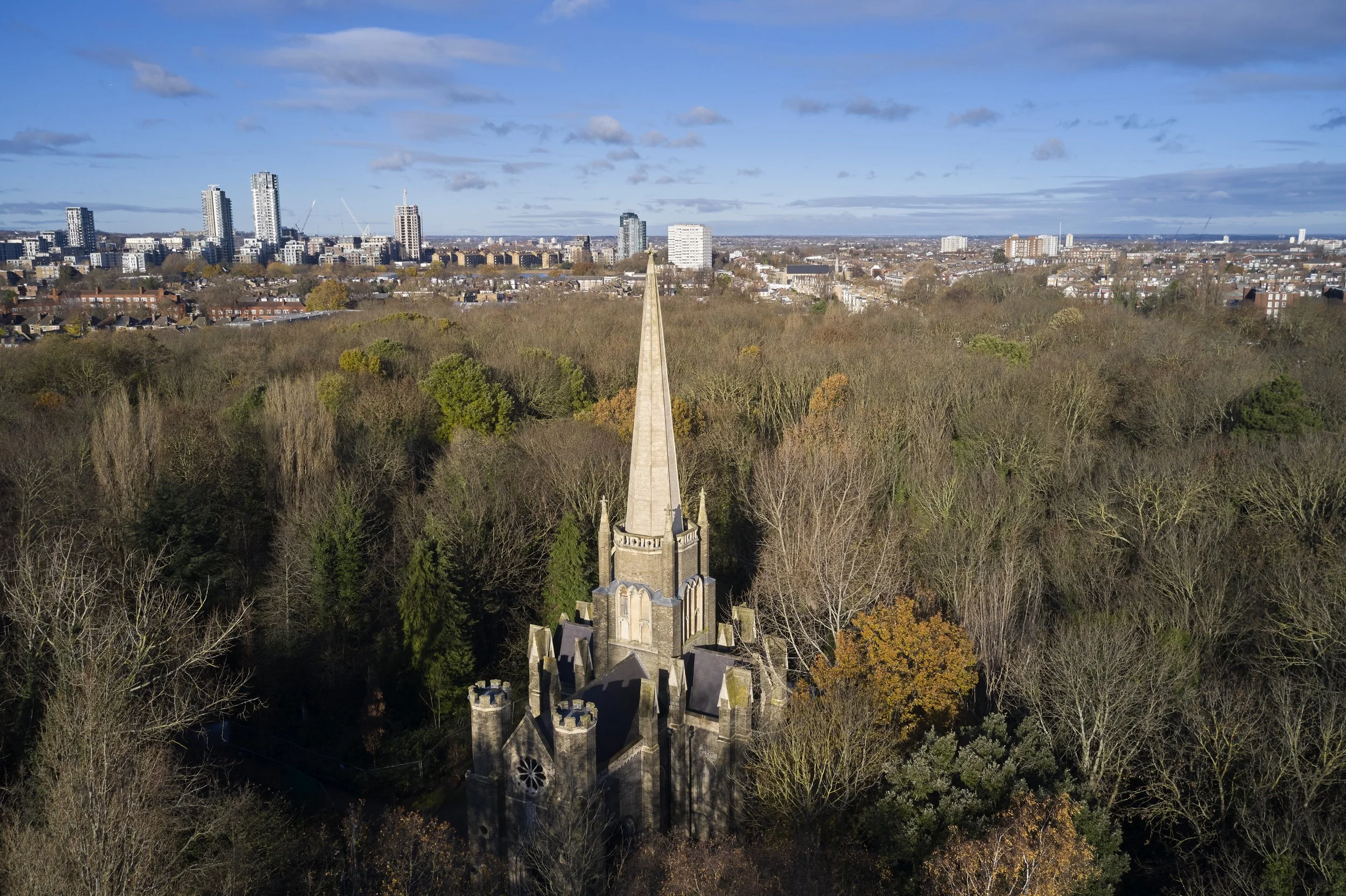
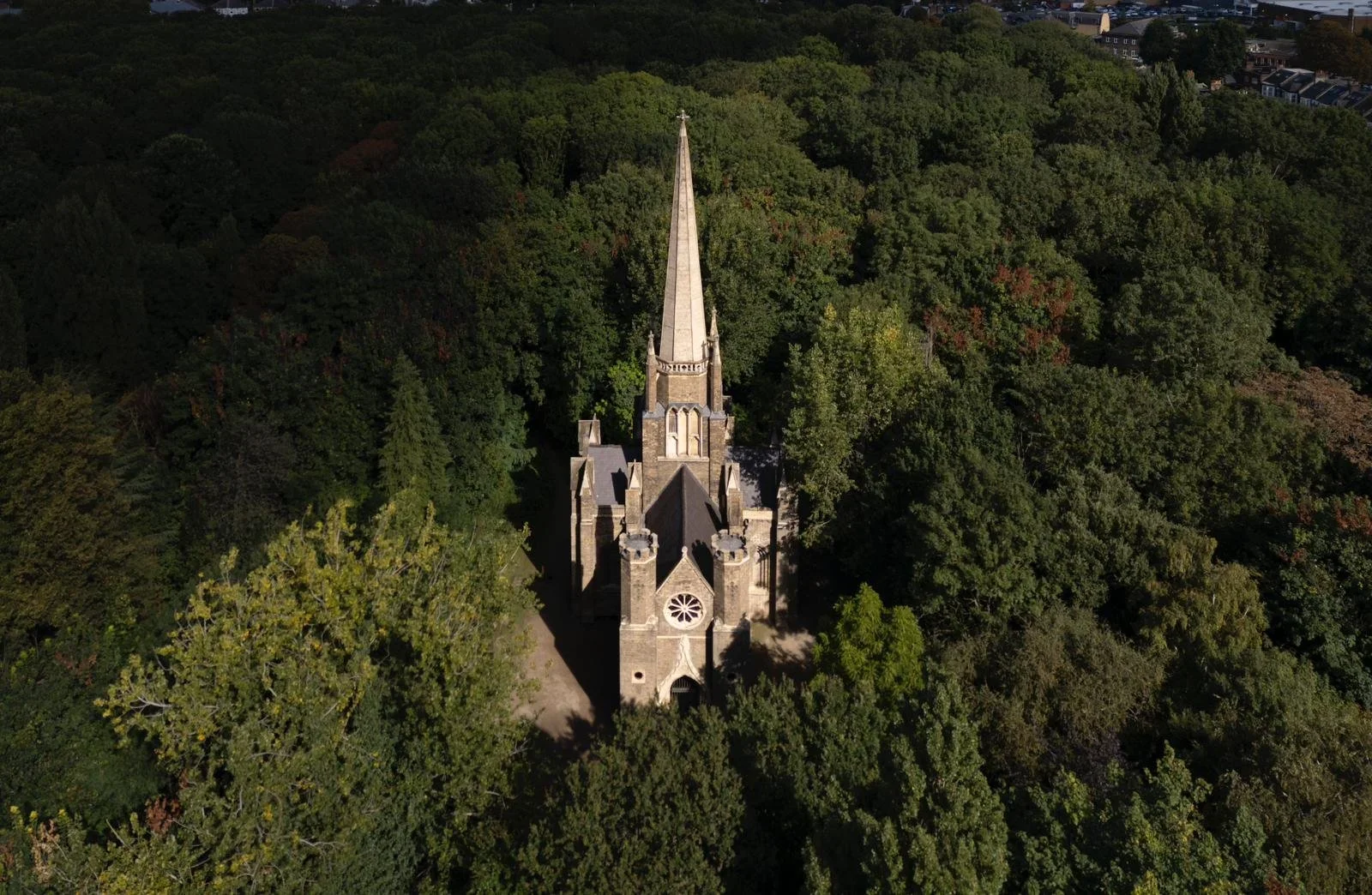
The Grade II listed chapel is a true treasure at the centre of Abney Park.
Designed by William Hosking, it stands as the oldest surviving non-denominational chapel in Europe. The chapel has undergone a full restoration to stabilise the building, safeguarding it from further decay and potential collapse. Now restored to its former splendour, it serves as a vibrant venue for music, poetry, community gatherings, and more.
The chapel was designed to celebrate religious harmony, and was a pioneer of the Dissenting Gothic building style, which included a blend of other architectural styles. You can learn more about the chapel’s architecture on its Wikipedia page.
Be sure to check out our What’s On calendar of events to get the chance to experience some of the creative events taking place at the chapel. You may also enjoy our Chapel Recordings series of performances that took place prior to the restoration.
-
The first foundation stone of the chapel was laid by the Lord Mayor of London Sir Chapman Marshall on the 20th of May 1840, the day of the opening ceremony of Abney Park Cemetery. The architect of the chapel was William Hosking FSA (1800 - 1861), a professor in architecture & civil engineering, and the first professor of architecture at Kings College. Hosking worked in conjunction with builder John Jay of London (interred in Abney Park on Dr Watts' Walk), and George Loddiges of Hackney, the renowned horticulturalist.
Central to the design of Abney Park, the chapel is the oldest surviving non-denominational chapel in Europe, and is the only surviving public building designed by Hosking, then considered a controversial architect. Hosking carefully planned the chapel to reflect a lack of bias towards any one Christian sect and the cruciform plan adopted the equal arms of the Greek cross, giving perceptual strength to the concept of equality before God.
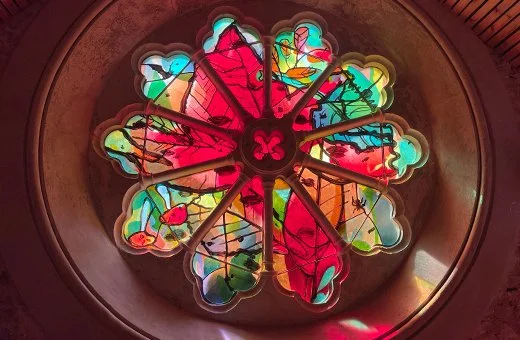
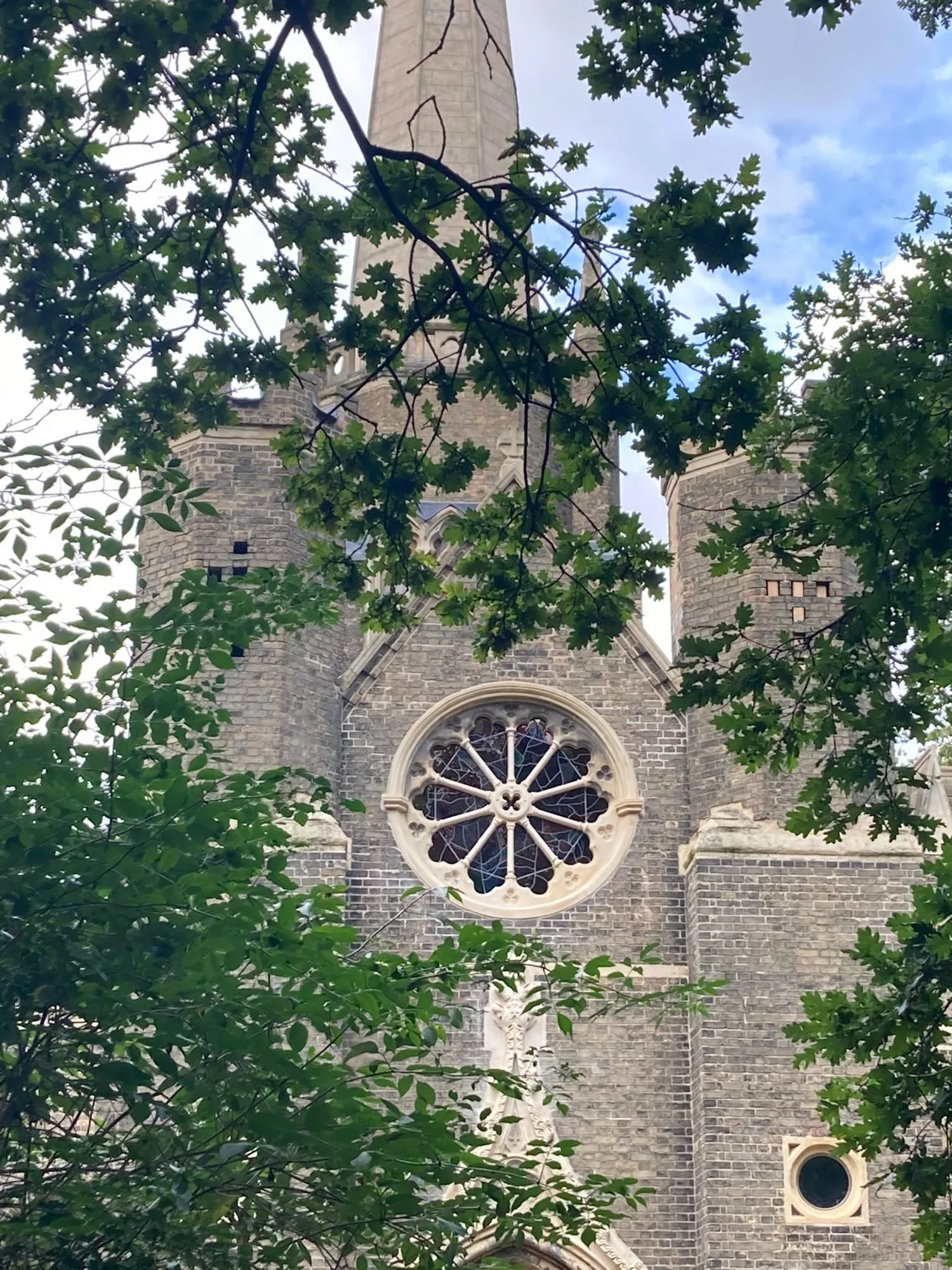
The chapel is Gothic, with a single interdenominational cell and one covered horse and carriage entrance. It was not consecrated and functioned purely as a funerary chapel - not a place of worship. Hosking used London Yellow Stock brick for the exterior brickwork, as well as wrought Bath Stone facings. Romanesque and Neoclassical features modified his interpretation of the Gothic architectural styles so closely associated with forms of Christian worship. No tracery was used on the three-pointed gothic windows, representing careful consideration of design simplicity. Winding wooden staircases in the twin turrets provided access to a public galley above the porte-cochere and to the roof level. Standing at 120 feet, the steeple was the tallest in the district at that time. It is octagonal in cross-section and gains additional height from a raised octagonal base with a decorated rim. The unusual ten-part rose stained glass windows echoed the cemetery's rosarium, planted by famed horticulturalists, Loddiges, which contained over 1000 varieties of rose.
Hiring the Chapel
Please contact the Hackney Venues team to enquire about Chapel hire.